How to Add One Strong Color to a Neutral Wardrobe
Disclosure: this post contains affiliate links. If you buy something through one, I may earn a small commission at no extra cost to you.
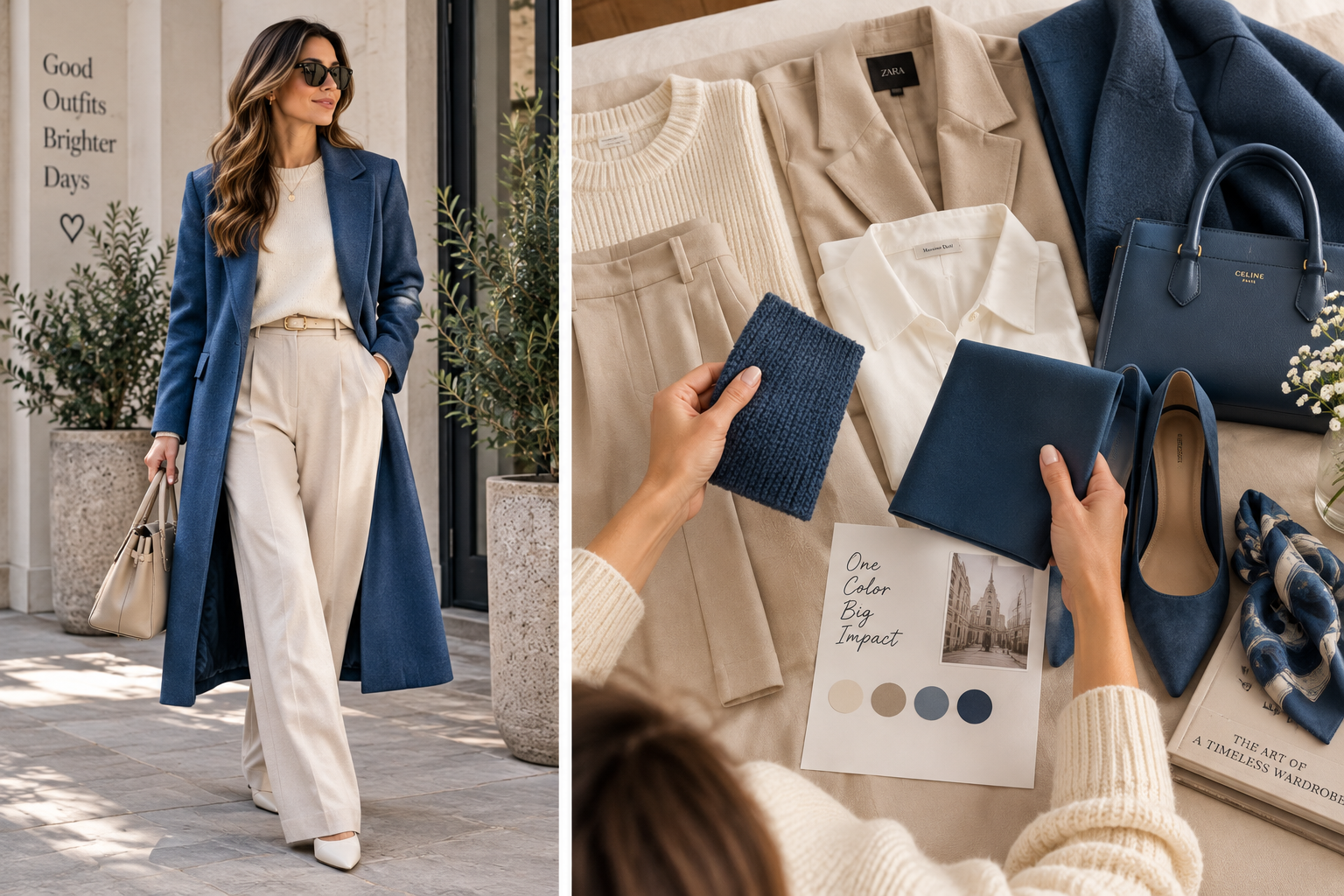
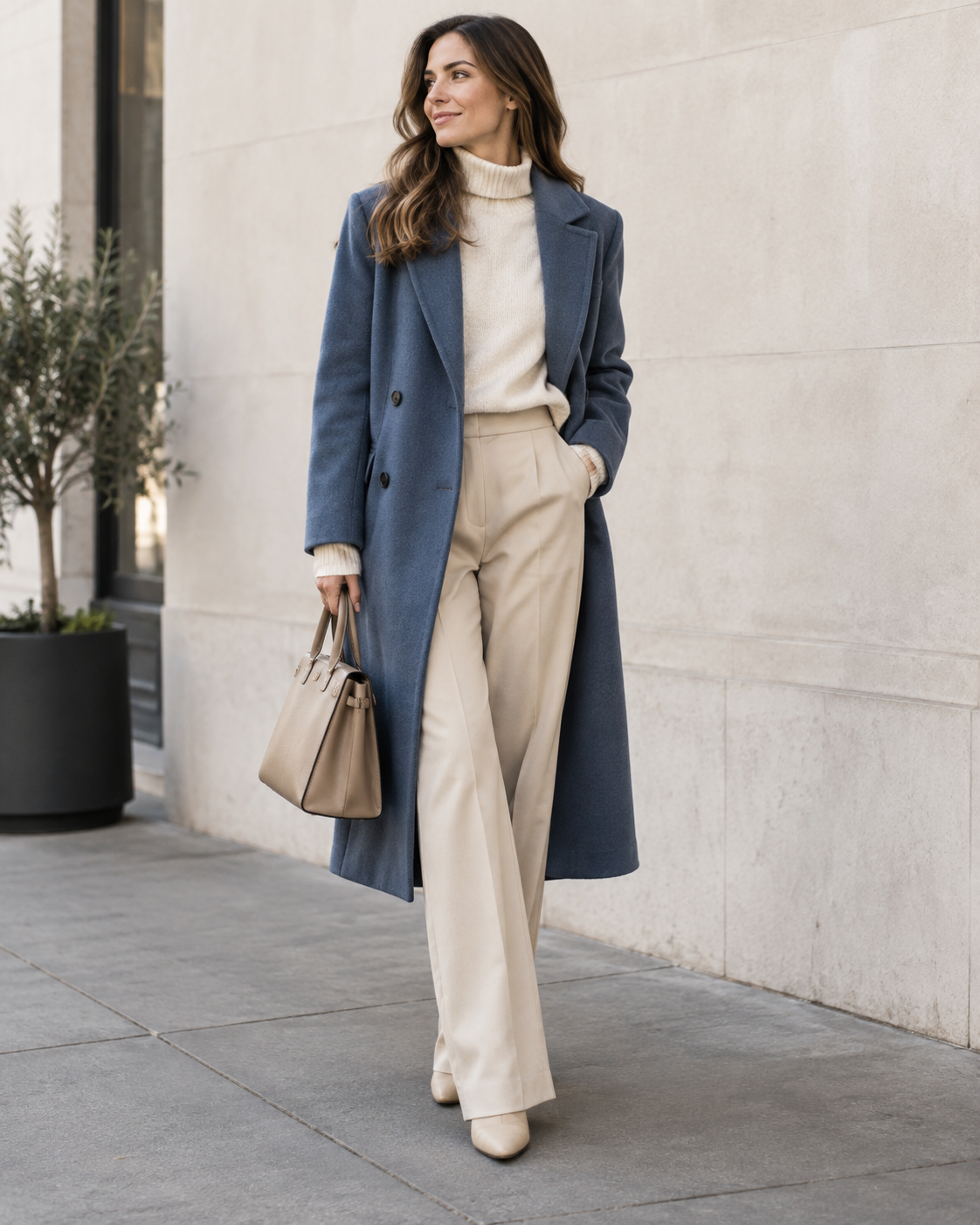
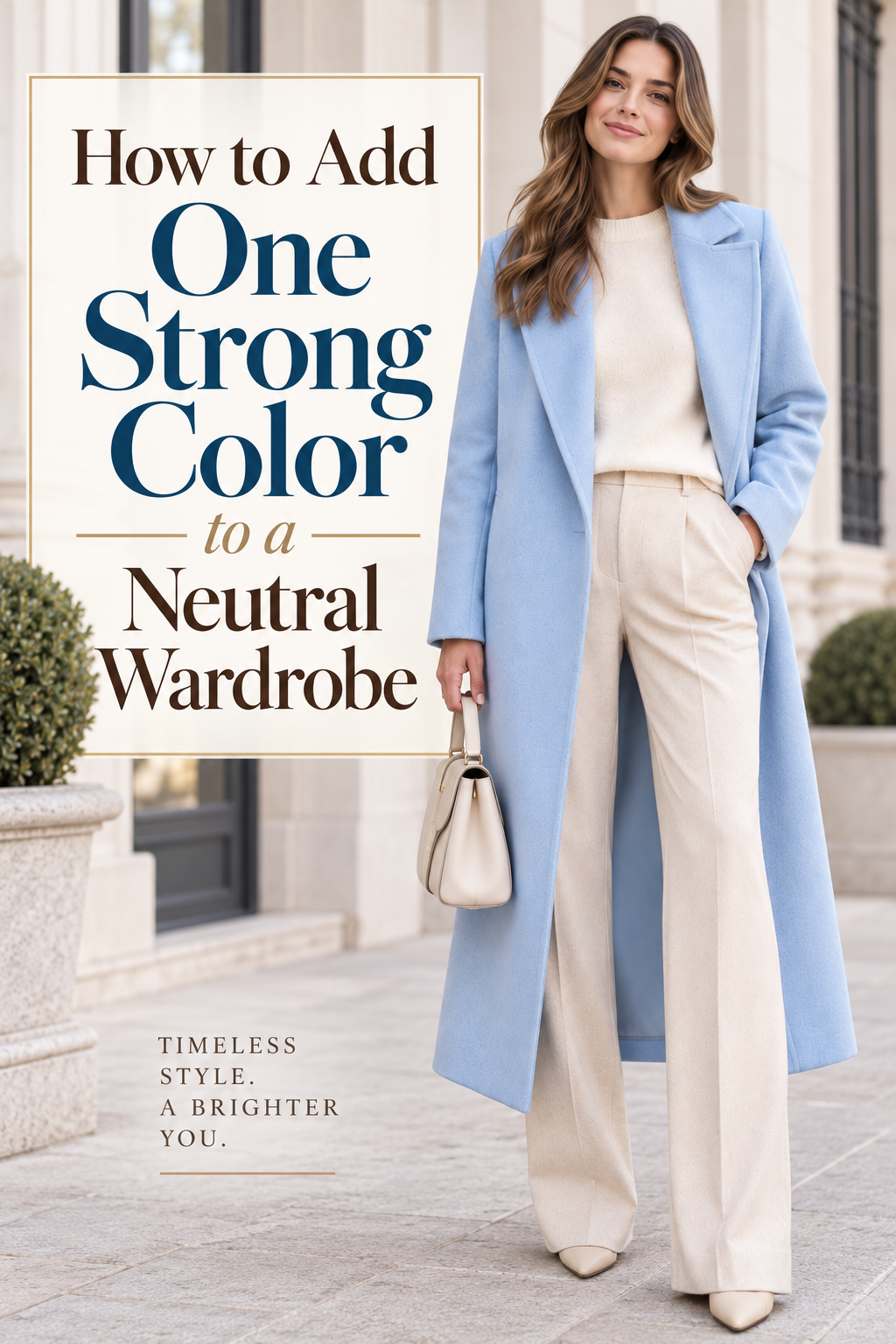
My closet was cream, beige, navy and gray for long enough that I'd stopped noticing it as a choice. It just was what I wore. Then I bought one coat in a deep icy blue slightly impulsively, slightly out of boredom with my own wardrobe and it's the single item of clothing I've been stopped and asked about more than anything else I own, including things that cost considerably more.
It wasn't a bold outfit. It was a neutral outfit with one loud decision in it, which turns out to be a completely different thing from a loud outfit, and a much easier one to actually wear.
This is exactly the same shift happening in interiors right now rooms moving from all-neutral to neutral-plus-one-accent → How to Add Color to an All-Neutral Room and it works for exactly the same reason. One strong color against a quiet background gets noticed. The same color lost in a busy outfit or a busy room doesn't.
Why one color works better than a colorful wardrobe
Committing to a fully colorful wardrobe is a big shift, expensive to build, and hard to reverse if it turns out not to suit you. Adding one accent color to an existing neutral wardrobe is none of those things it's low-risk, cheap to test, and it does most of the visual work a full palette change would.
The mechanism is the same three-times repetition rule that makes any color read as a decision rather than an accident. One blue item in an all-neutral closet is a coincidence. Blue showing up three or four times a coat, a bag, one top reads as your color.
This year, that color is blue
Icy, cool-toned blue is the standout accent color across fashion right now, and it's worth knowing about specifically because it's an unusually easy color to wear. It sits coolly enough to work against warm and cool skin undertones alike, and it reads as considered rather than "trendy" the way a more novelty color often does.
But the technique matters more than the specific shade. Rust, deep plum, forest green the method below works identically with any of them. Pick whichever color you'd actually be glad to put on a Tuesday, and treat blue as this year's example rather than a rule.
Where to start, cheapest to most committed
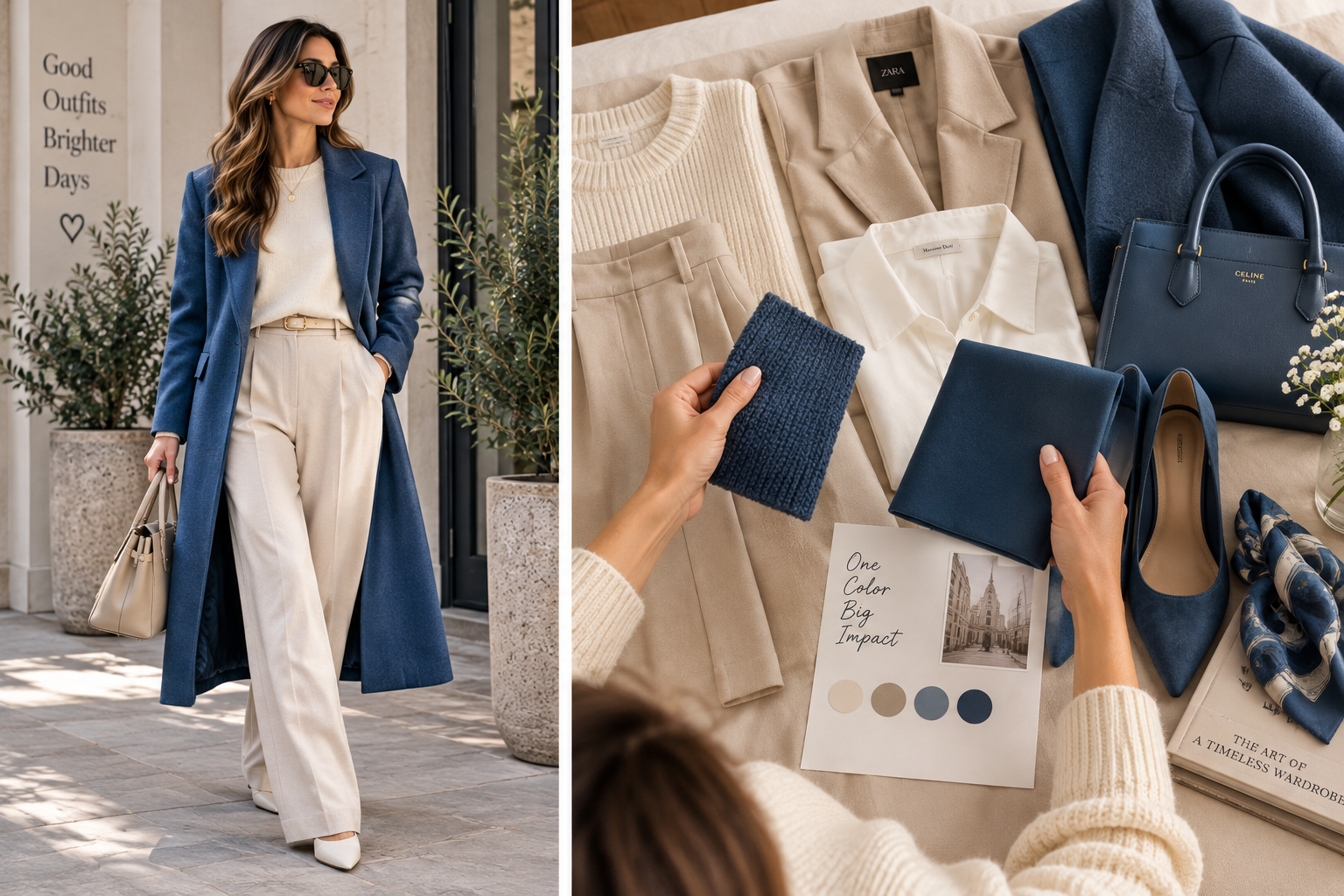
1. Accessories first almost no risk
A scarf, a bag, jewelry with a blue stone. Small pieces of color against a neutral outfit have outsized visual impact precisely because there's nothing competing with them.
A silk scarf worn at the neck or tied to a bag strap is close to the lowest-commitment way to test whether this color actually works for you before spending on anything larger.
2. Shoes second
The same logic as the shoe capsule → The Shoe Capsule: How Few Pairs You Actually Need applies here a colored shoe against neutral trousers or a dress does a lot of work without needing to coordinate with much else, since shoes are somewhat visually separate from the rest of an outfit already.
3. One top or sweater
This is where the color starts genuinely reading as part of your wardrobe rather than an accessory experiment. A blue knit sweater under a neutral blazer, or worn alone with neutral trousers, is the version most people land on as their actual daily use of an accent color.
4. Outerwear the most visible, most committed option
This is what happened with my coat, and it's worth understanding why it worked so well: outerwear is seen more than almost anything else you own, since it's the layer on top in public for months of the year. One strong-colored coat against an otherwise neutral wardrobe does more visual work per garment than any other category.
A wool blend coat in icy blue over any neutral outfit underneath is the single highest-impact version of this whole idea everything under it can stay exactly as it already is.
Making it feel like your color, not just a color
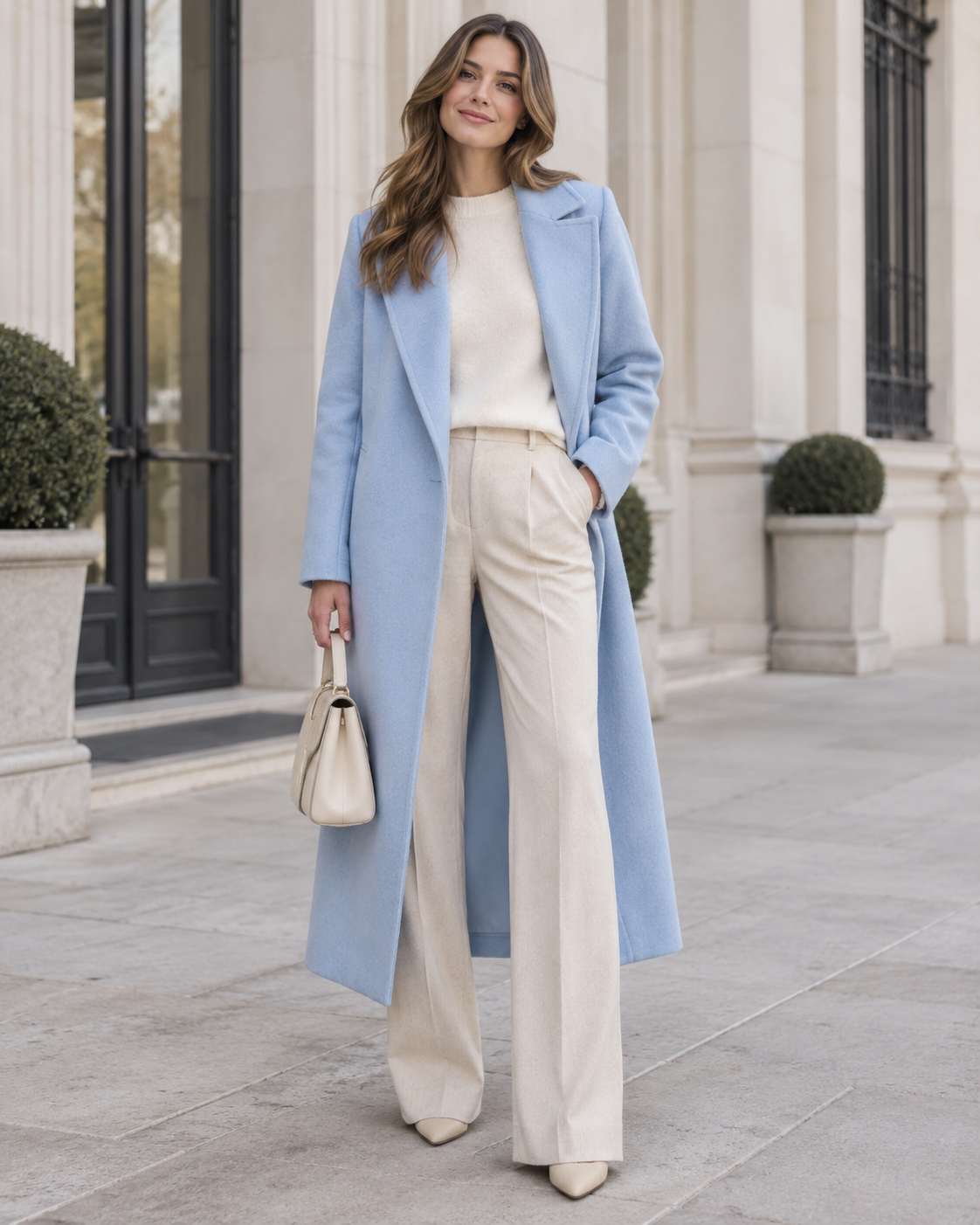
Repeat it at least three times across the wardrobe, not just once. One blue coat is a single statement piece. A coat, a scarf and one sweater in related blue tones is a color that belongs to you.
Vary the shade slightly rather than matching exactly. An icy pale blue scarf, a deeper blue coat, and a blue-gray sweater read as more considered than three items in the identical shade the same "coordinate, don't match" principle that applies to metals and jewelry → Proportion: The Reason Some Outfits Look Expensive.
Keep everything else quiet. The whole effect depends on the accent color having nothing to compete with. One loose, one fitted same volume-balance thinking applies to color as much as silhouette : one strong color, everything else restrained.
What to avoid
Buying several accent colors at once. The exact failure of too many focal points in a room → Living Room Focal Point: Why Your Room Feels Unfinished multiple loud colors compete rather than compound, and you end up with a closet of orphaned pieces that don't relate to each other or to your neutrals.
Starting with the coat. Tempting, because it's the highest-impact option, but it's also the most expensive and least reversible. Test with a scarf or a pair of shoes first and confirm you actually reach for the color before committing real money.
Chasing the exact trending shade over one you like. A color that photographs well on someone else but that you don't enjoy wearing will sit in the closet regardless of how "right" it currently is.
Wearing it with other bold colors. The whole mechanism depends on restraint everywhere else. The same rule that governs any outfit one point of real color, not several competing for attention.
The realistic starting point
If you're moving away from an all-neutral wardrobe for the first time, here's the order I'd actually go in:
- A scarf or small accessory. Confirms whether the color works for you at essentially no cost.
- One pair of shoes, if the accessory stage went well.
- A sweater or top. This is where it becomes a genuine wardrobe habit rather than an occasional accent.
- Outerwear last, once you're certain this is the expensive, high-visibility payoff, not the starting point.
What I wear now
The blue coat, still. A scarf in a slightly lighter shade of the same blue, and one sweater that's closer to blue-gray than true blue. Everything else in the closet hasn't changed at all.
It's still, technically, a neutral wardrobe. It just has one loud decision in it now, repeated enough times that it doesn't read as an accident anymore.
Affiliate Disclosure
Some links in this post are affiliate links. If you buy something through one, GlamNestStudio may earn a small commission it doesn't cost you anything extra. I only link to things I'd recommend to a friend, and I've used or genuinely researched everything mentioned here. It's what keeps the guides on this site free.
Before you go
More on proportion, fit and building a wardrobe you actually want to wear, across the guides on GlamNestStudio.