Effortless Doesn't Mean Cheap: The Quality Basics Worth Upgrading
Disclosure: this post contains affiliate links. If you buy something through one, I may earn a small commission at no extra cost to you.
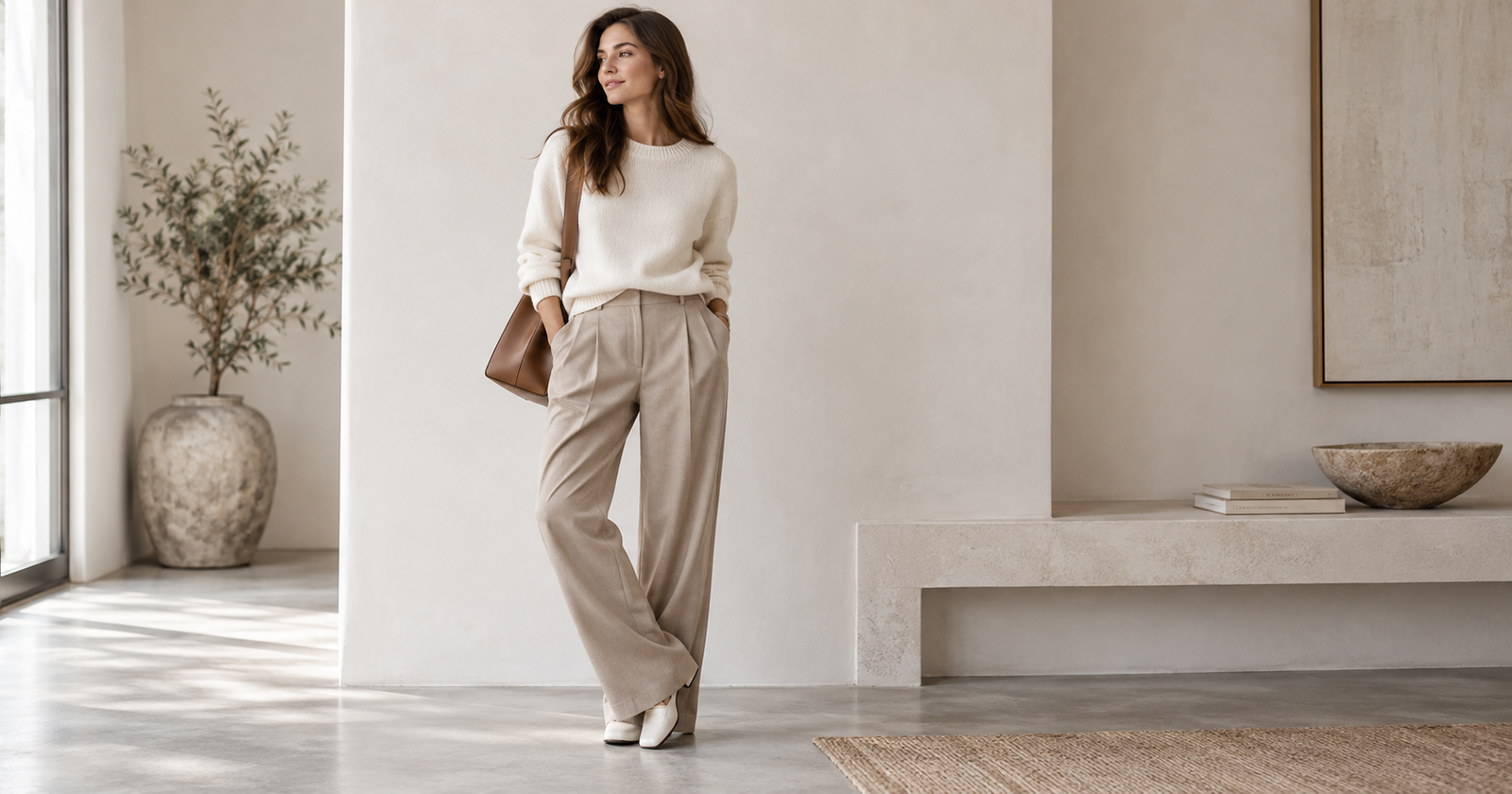
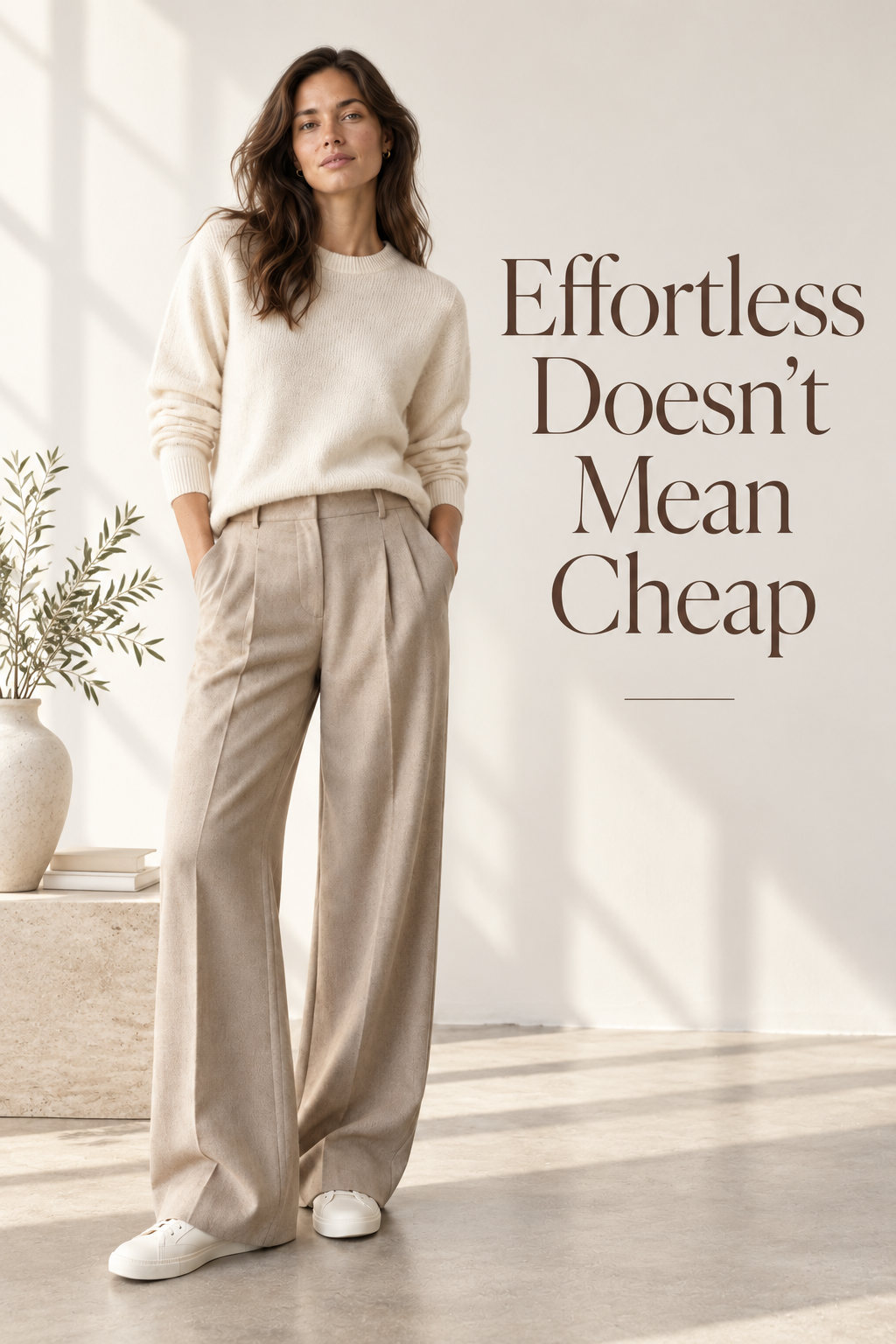
I spent a wedding a few years ago quietly trying to work out why two women across the room looked so put-together while wearing what were, honestly, very simple clothes. Not much jewelry. No elaborate styling. One was in a plain cream sweater and trousers. It took me an embarrassingly long time to realize the answer wasn't styling at all. It was that the sweater actually fit, the fabric had real weight to it, and none of it was fighting her to stay in place.
Meanwhile I'd spent an hour on an outfit with more pieces, more color, more "effort" in the visible sense, and looked like I'd tried considerably harder for a worse result.
That's the whole idea behind this post, and it's less about a specific trend than a permanent fact about clothes: looking effortless is usually the result of fewer, better pieces not more elaborate ones.
Why "more effort" often looks like less
Visible effort lots of pieces, lots of color, lots of styling decisions happening at once reads as trying. Which isn't a bad thing necessarily, but it's a completely different effect from looking put-together, and the two get confused constantly.
A small number of well-made basics, worn simply, does something visible effort can't: it lets the quality be the thing you notice, rather than the quantity of decisions. A good sweater in a relaxed, quiet outfit gets noticed precisely because there's nothing else competing with it.
This is the same principle behind why three colors done deliberately beats six done accidentally → Why Your Clothes Fit But Don't Look Right restraint reads as confidence, and confidence reads as expensive, regardless of what anything actually cost.
Where to spend, and where genuinely not to
Not everything needs the upgrade. Here's where quality actually shows, ranked by how much difference it makes.
1. Knitwear the highest-impact upgrade on this list
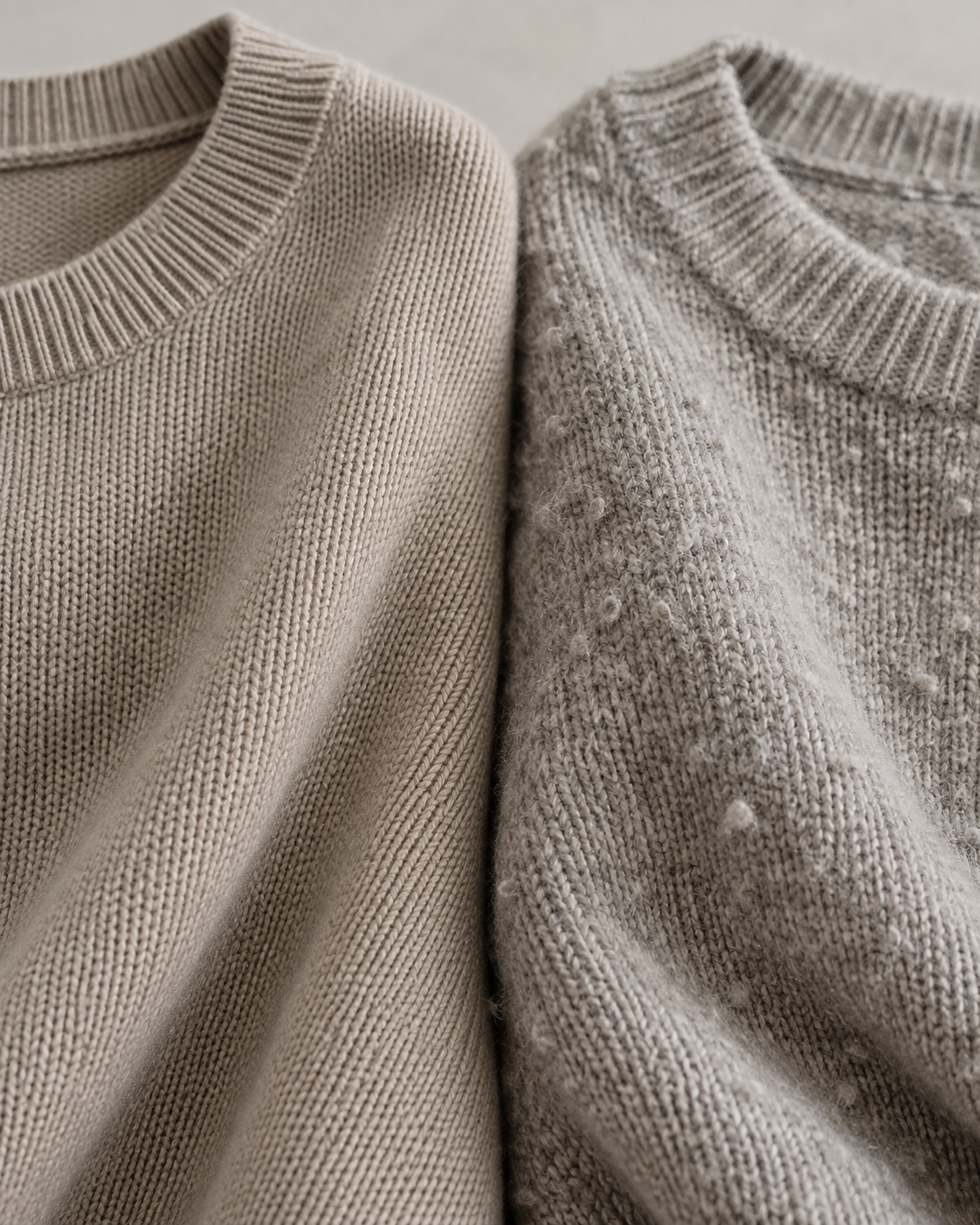
The single biggest gap between cheap and good is in knitwear, and it's the place most worth spending real money if you're only upgrading one category. The fiber content genuinely predicts how it ages → Fabric Labels, Decoded: What Actually Lasts a $180 merino or cashmere-blend sweater that looks essentially the same in year four is a better purchase than three $40 acrylic ones that pill within a season each.
A merino wool crewneck sweater in a neutral tone is close to the single most useful item on this entire list it works under a blazer, alone with trousers, or as the "mid layer" in any layering system → How to Layer Without Looking Bulky.
2. Trousers where fit does almost all the work
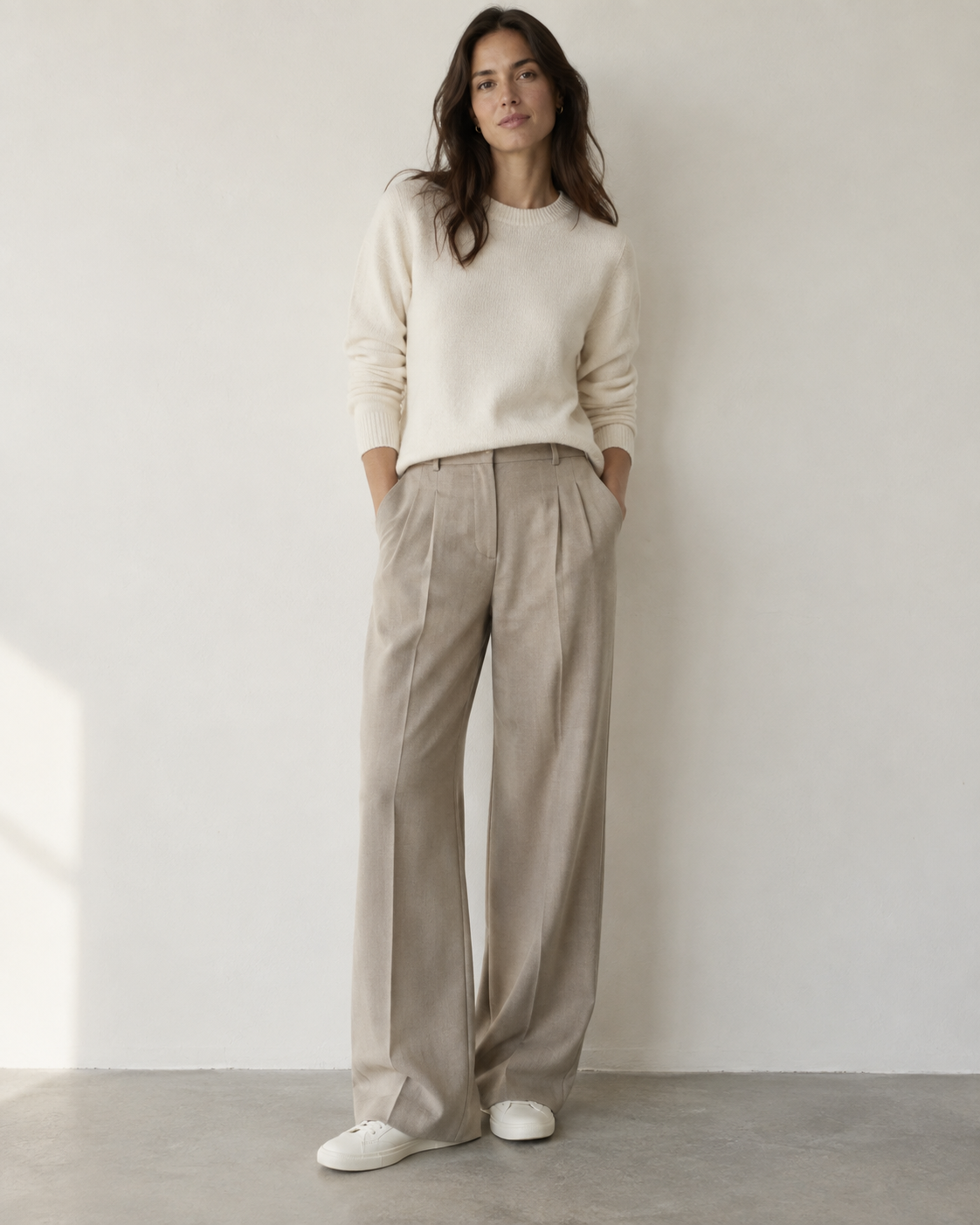
A pair of well-cut trousers in a good fabric, properly fitted through the waist and hemmed to the right length, reads as expensive regardless of the actual price. This is the category where alterations genuinely change the outcome a $20 hem can be the entire difference between trousers that look considered and ones that don't.
A wide-leg wool blend trouser holds a crease and drapes in a way cheaper poly blends can't manage, and it's flattering across more body shapes than a slim cut tends to be.
3. Outerwear worth it if you'll wear it often
A well-made coat is seen more than almost anything else you own, since it's the layer on top in public for months of the year. Wool over synthetic, unless the piece is genuinely just for rain.
A wool blend coat in a neutral tone earns its cost back faster than almost any other single purchase, purely through how often it's actually seen.
4. Shoes but only the ones you actually wear often
This is the shoe capsule test again → The Shoe Capsule: How Few Pairs You Actually Need spend on whichever pair earns six or more outfits, not on the pair that photographs best sitting still.
A [[AFF: leather loafer]] is the quiet-luxury shoe almost by definition no obvious branding, works with trousers, skirts and dresses, and it looks better with age rather than worse, which almost nothing synthetic manages.
5. Where NOT to spend more
Basic cotton t-shirts. Fit and weight matter, but the price difference above a certain point mostly buys a logo, not meaningfully better fabric. Read the label, not the price tag.
Trend pieces. Anything bought because it's the shape or color of the season is, by definition, not going to be worn long enough to justify spending more on it. Buy those cheap and expect a short life from them.
Anything you'll wear twice a year. An event bag or occasion shoe doesn't need the same budget as something in weekly rotation → The Bag Capsule: How Many You Actually Need cost per wear should decide the budget, not the category.
The "no visible effort" test
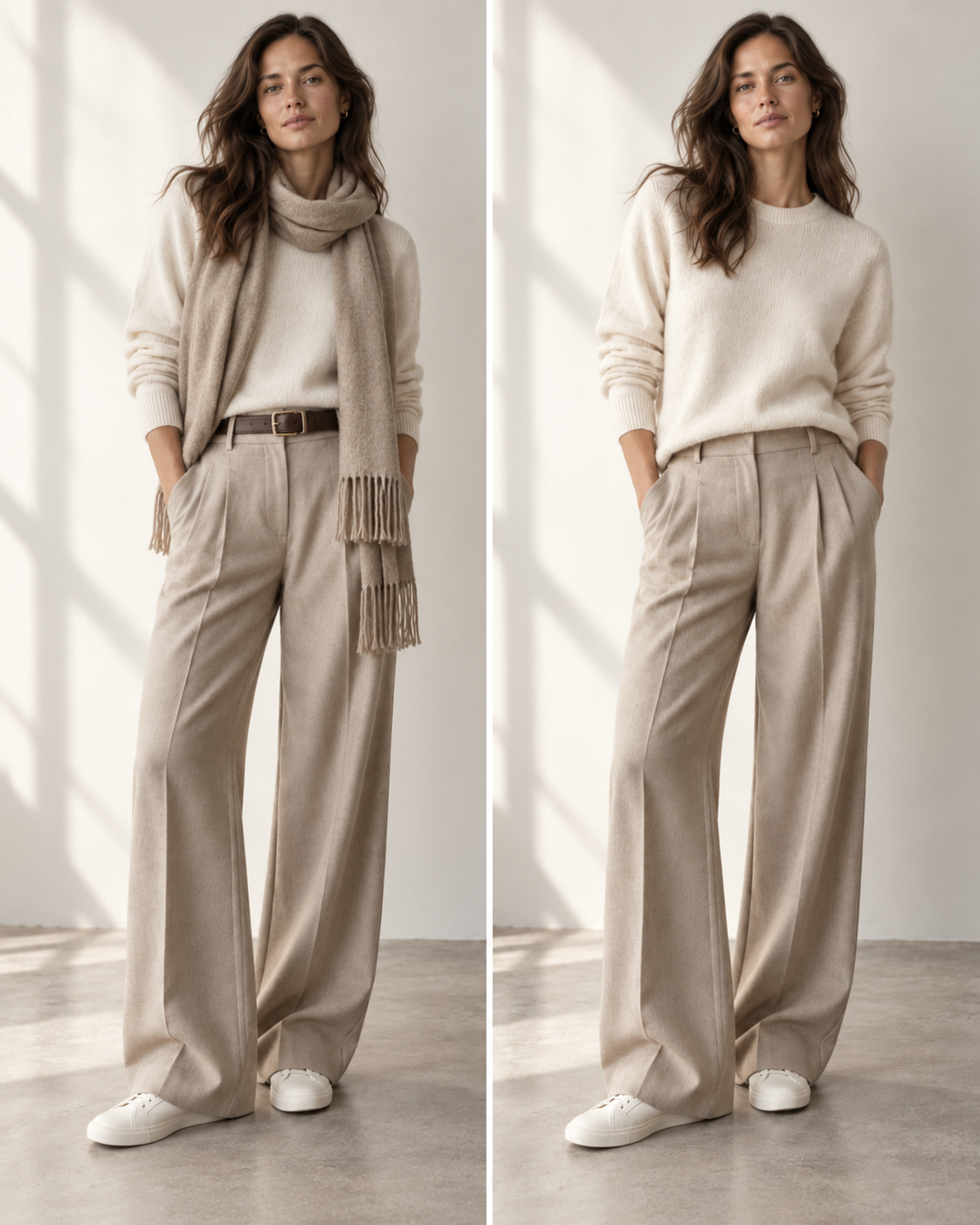
Before getting dressed, a genuinely useful check: could you remove one thing from this outfit and have it still work?
If yes, the outfit has an extra decision in it that isn't earning its place. The most put-together outfits tend to survive this test easily, because they're built from a small number of pieces each doing real work, rather than a larger number each doing a little.
What this looks like in practice: one good sweater, one well-cut trouser, one pair of shoes that actually fits the outfit's formality, and if anything one piece of jewelry. Not zero styling. Just no single piece competing for attention with another.
Texture over branding
The current shift in how quality actually shows up is away from visible logos and toward things you can only really appreciate up close the weight of a knit, the drape of a trouser, the way a coat sits across the shoulders. The same texture-over-flash principle that fixes a flat, cold room applies here almost exactly.
What to check in the store, quickly:
- Hold the fabric up to light. Thin and see-through won't hold its shape.
- Pinch and release. Good fabric has body and recovers; cheap fabric stays slightly dented.
- Check the seams and hem allowance generous allowance means it can be altered and will last through alterations.
What I'd actually buy first
If you're upgrading gradually rather than all at once:
- One good sweater, worn constantly. Highest visible return of anything on this list.
- One pair of well-fitted trousers, hemmed properly.
- A coat, if your current one is genuinely worn out or ill-fitting.
- One pair of shoes that pass the six-outfit test.
Everything else can stay exactly as it is. This isn't a full wardrobe overhaul it's four purchases, spread over as long as it takes, each chosen because it gets worn constantly rather than because it completes a look.
What I wear now
A cream merino sweater I've had for three years, wide-leg wool trousers, and loafers that have gone slightly soft with wear in a way that looks better, not worse. Nothing about it announces itself.
It's also, unintentionally, almost exactly what that woman at the wedding was wearing. Took me a few years and a fair amount of unnecessary effort to get there.
Affiliate Disclosure
Some links in this post are affiliate links. If you buy something through one, GlamNestStudio may earn a small commission it doesn't cost you anything extra. I only link to things I'd recommend to a friend, and I've used or genuinely researched everything mentioned here. It's what keeps the guides on this site free.
Before you go
More on buying fewer, better things and making them last closet and home across the guides on GlamNestStudio.