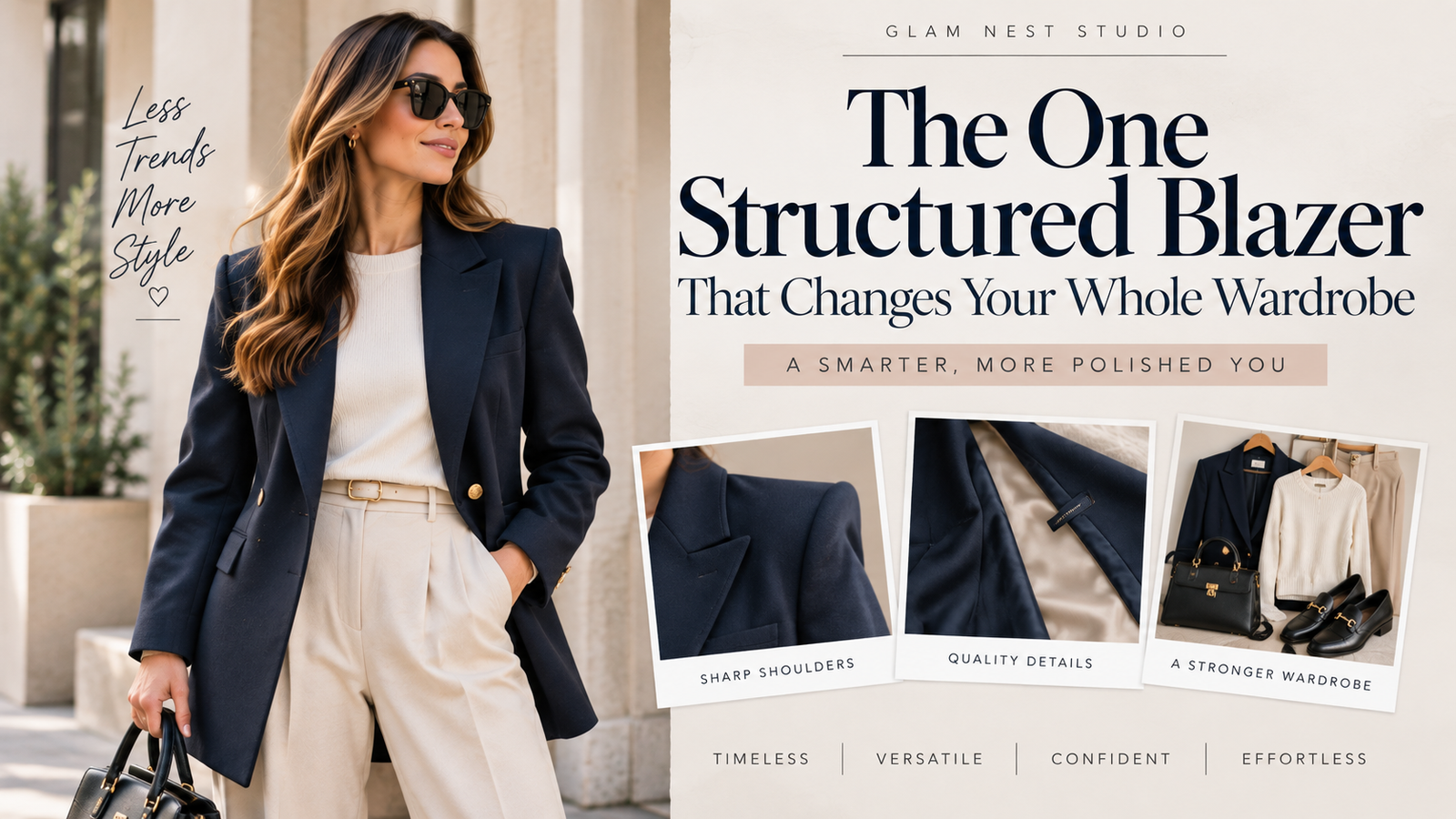
The One Structured Blazer That Changes Your Whole Wardrobe
Disclosure: this post contains affiliate links. If you buy something through one, I may earn a small commission at no extra cost to you.
For a long stretch of years, everything I owned was soft. Oversized sweaters, relaxed trousers, cardigans I could disappear into. Comfortable, easy, and I only noticed this in hindsight completely without a single sharp edge anywhere in the closet.
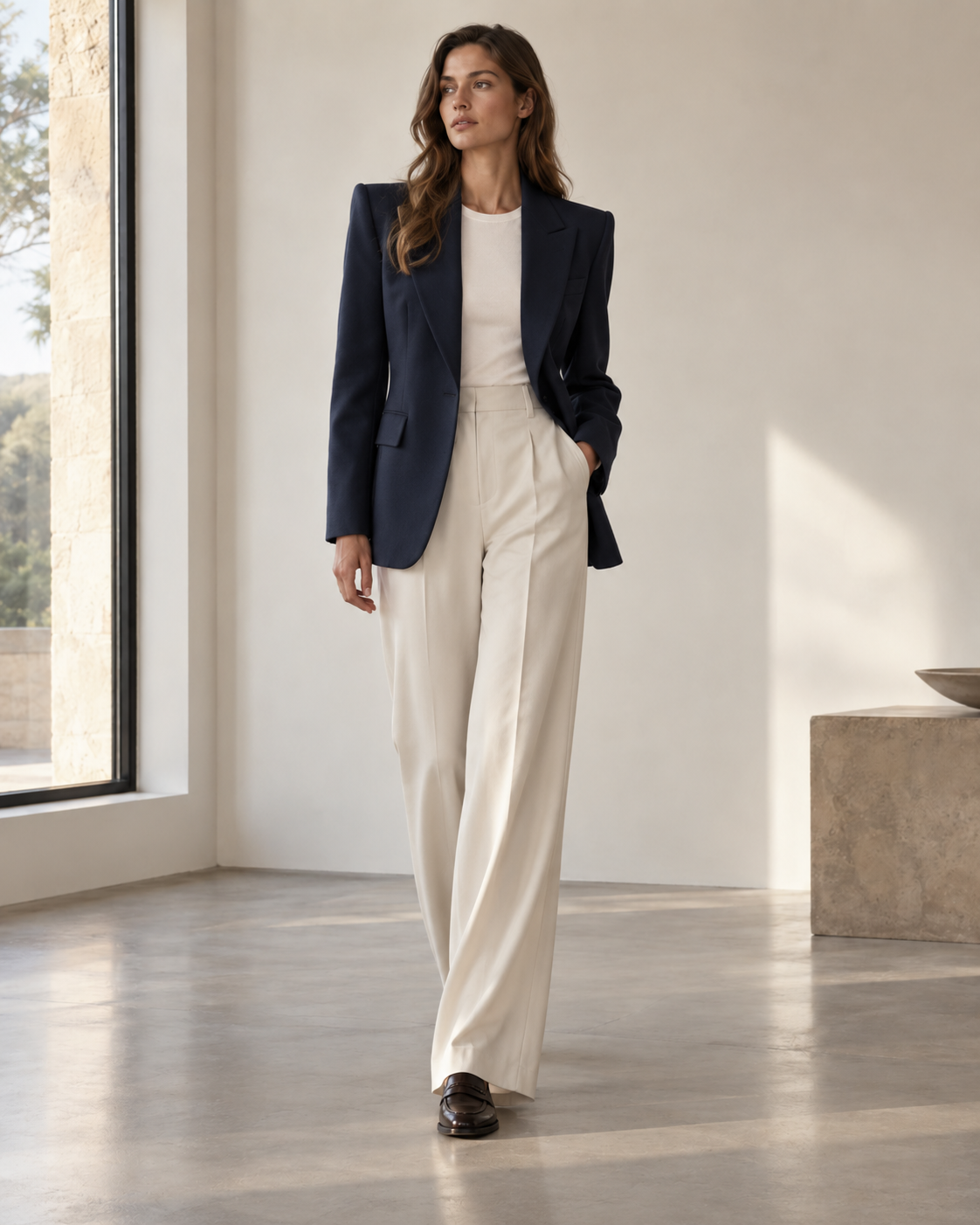
Then I bought one structured blazer, more on impulse than conviction, in a moment of being mildly tired of looking the same in every photo. Sharp shoulders, a defined waist, real structure through the body. I put it on over the exact same plain top and jeans I'd worn a hundred times, and the outfit read completely differently. Not because the top and jeans had changed. Because something in the outfit finally had a shape.
That's the entire argument for this piece, and fashion coverage this year backs it up plainly: after several years of soft and oversized dominating, structure is back, and it's back in a way that's genuinely wearable rather than costume-like.
Why one structured piece changes more than it should
Soft, relaxed clothing is comfortable and forgiving, and there's nothing wrong with building a wardrobe around it. But a wardrobe made entirely of soft pieces has no shape reference point nothing in it defines a silhouette, so every outfit ends up reading as "comfortable" rather than "put-together," regardless of how nice the individual pieces are.
One structured piece gives the rest of the outfit something to organize around. This is the same principle as a focal point in a room → Living Room Focal Point: Why Your Room Feels Unfinished a space, or an outfit, with nothing anchoring it reads as unfinished even when every individual element is fine on its own. A sharp blazer over simple pieces does for an outfit what one striking piece of art does for a plain wall.
What makes a blazer actually "structured"
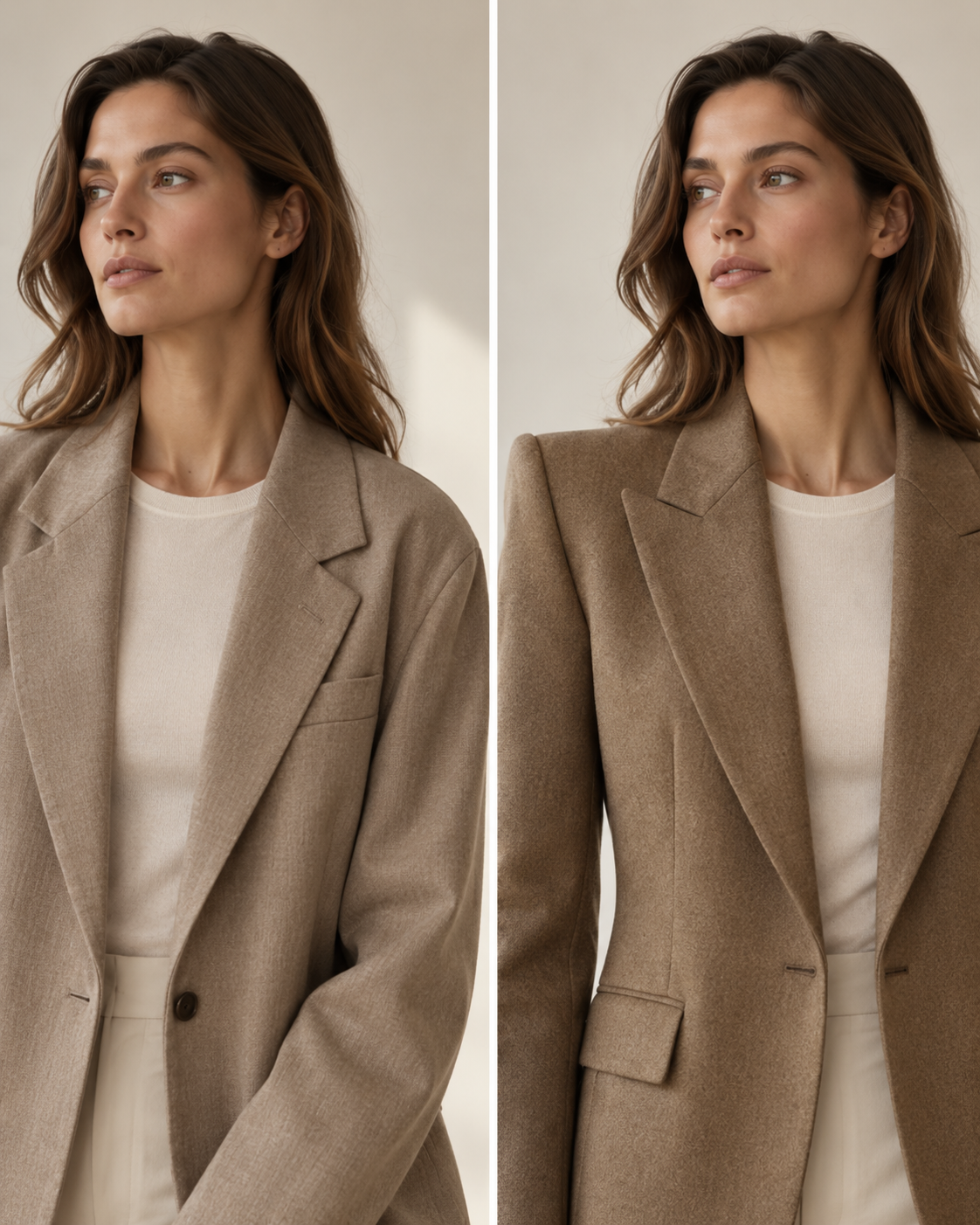
Not every blazer does this job. The current wave of tailoring is specifically about a few construction details, and it's worth knowing which ones matter before buying.
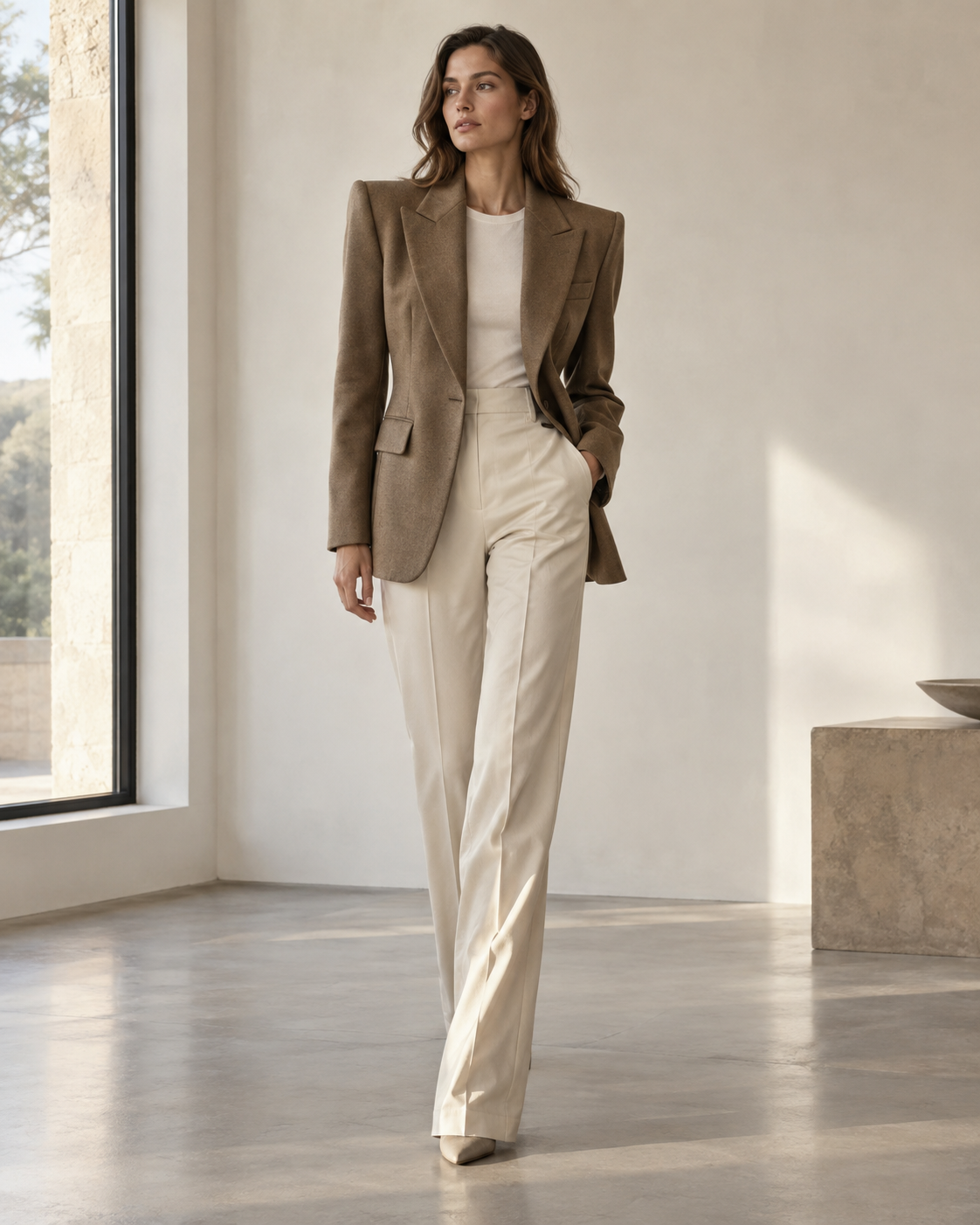
Shoulder construction is the biggest signal. A structured blazer has some padding or built-up shoulder enough to create a clean, slightly squared line, not an exaggerated 80s silhouette. This is the shoulder-seam-at-the-edge-of-the-shoulder principle from fit generally, just with actual structure behind the fabric rather than none at all.
A defined waist, through either a fitted cut, a single button positioned at the narrowest point, or a slight nip in the side seams. This is what separates a structured blazer from a boxy one the same ratio principle from proportion → Proportion: The Reason Some Outfits Look Expensive applies here directly.
Real interfacing in the lapel and front, so the blazer holds its shape rather than folding softly. Hold the lapel and let go a structured blazer springs back to its line; a soft, unstructured one just droops. A blazer with proper interfacing and a full lining is worth checking for by hand in the store, since this detail rarely shows up clearly in a product photo.
A relatively substantial fabric weight. Very lightweight blazers, however nicely cut, can't hold a sharp line the way something with real body can.
Color, and why neutral is the right call here
Navy, black, cream, or deep burgundy are where the current tailoring trend is landing, deliberately restrained rather than colorful. This isn't a coincidence a structured blazer is already doing a lot of visual work through its shape, and a loud color on top of strong structure competes with itself.
A fitted navy blazer in particular reads as both currently relevant and genuinely timeless it's the single safest color choice if you're only buying one, since it works under nearly identical rules to the neutral base of any capsule wardrobe.
How to wear it without it feeling like a costume
The trap with structured tailoring is dressing it up so much that the whole outfit reads as an event rather than a Tuesday. The actual current approach is closer to the opposite.
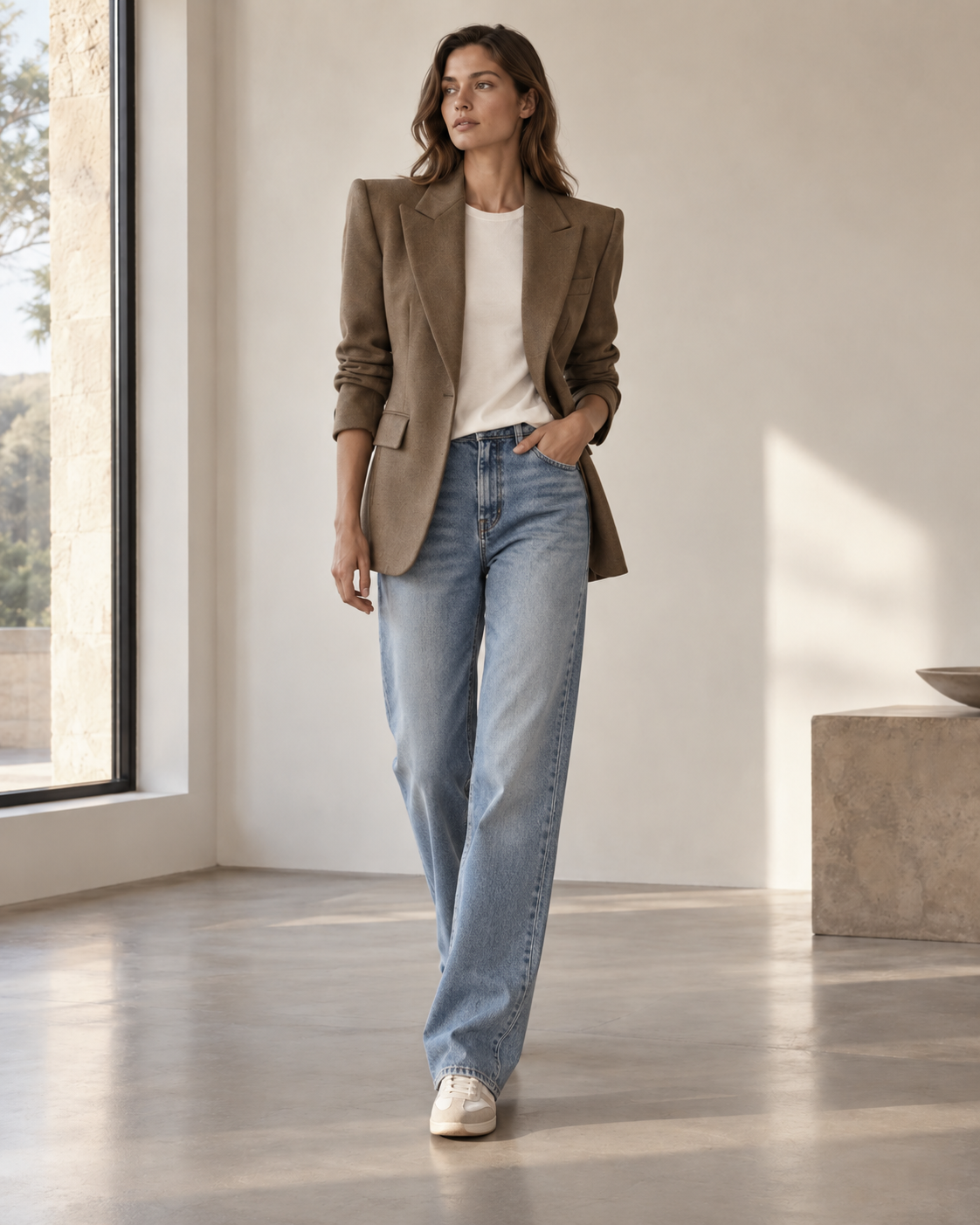
Let the blazer be the only structured thing in the outfit. Everything underneath should stay simple and relaxed a plain top, straight-leg jeans, simple trousers. One structured element, everything else quiet, is the same volume-balance rule that applies to any outfit.
Wear it open over a simple layer, rather than buttoned over a full shirt-and-trousers combination, for a version that reads as current rather than corporate. This is closer to the actual "power dressing, but relaxed" mood driving the trend than a fully buttoned, matched suit.
One structured piece is enough. Adding structured trousers, a structured bag, and structured shoes all at once tips into costume territory. Keep the rest of the outfit soft, and let the blazer carry the entire silhouette.
Where to actually spend the money
This is the piece worth genuine investment in a wardrobe it's worn constantly, over almost everything else you own, and the fabric and construction show more on a structured piece than on almost anything soft, where a slightly cheaper fabric can hide more easily inside a relaxed drape.
What actually costs more, and is worth it:
- Real shoulder padding rather than none
- A proper lining, which affects how the blazer moves and how long it holds its shape
- Natural fiber content a wool or wool-blend blazer over polyester holds a structured line far longer, the same way it does in any garment where fabric predicts how it ages → Fabric Labels, Decoded: What Actually Lasts
Fit over price, always. A blazer that fits at the shoulders and gets tailored elsewhere beats a more expensive one that doesn't shoulders can't be cheaply altered, so that's the one detail to get right before anything else .
Building around it
Once the blazer's in place, the rest of a capsule can stay almost entirely soft and simple, because the blazer is providing the structure the whole wardrobe needs.
- One or two simple tops in fabrics with some weight the same quality-over-quantity thinking as any capsule → A Capsule Wardrobe That Isn't All Beige
- Wide-leg trousers, relaxed rather than structured, to balance the sharpness above
- One pair of shoes that elevates rather than competes leather loafers, or any shoe that earns its place across several outfits → The Shoe Capsule: How Few Pairs You Actually Need, not another structured statement piece
What I'd tell someone buying their first one
Don't buy it in a color you're unsure about, and don't buy the most dramatic silhouette in the store on a first attempt. Start with navy or black, a moderate shoulder sharp but not exaggerated and wear it open over something you already own before deciding whether to build further around it.
Mine has been worn over nearly every plain top and pair of jeans I own since I bought it. It's not the most expensive thing in my closet. It's the thing that makes the rest of the closet look considered.
The short version
After years of soft and oversized, structure is genuinely back but the wearable version of it is one sharp piece over otherwise simple clothes, not a fully matched, heavily structured outfit throughout.
Buy one well-made blazer in a neutral color, with real shoulder structure and a defined waist. Wear it open over plain basics. Let it be the only structured thing in the outfit. That's the entire technique, and it does more for how a wardrobe reads than almost anything else you could add to it.
Affiliate Disclosure
Some links in this post are affiliate links. If you buy something through one, GlamNestStudio may earn a small commission it doesn't cost you anything extra. I only link to things I'd recommend to a friend, and I've used or genuinely researched everything mentioned here. It's what keeps the guides on this site free.
Before you go
More on proportion, fit and building a wardrobe that actually works hard for you, across the guides on GlamNestStudio.